C CIVESTO
PRODUCT LIVE · SUPPLIER COMPONENT

From a report to actionable evidence.

Civesto turns what a citizen records on the road into an auditable case file the responsible authority can actually process. The system makes no legal assessment and publishes nothing — the decision always stays with the authority.

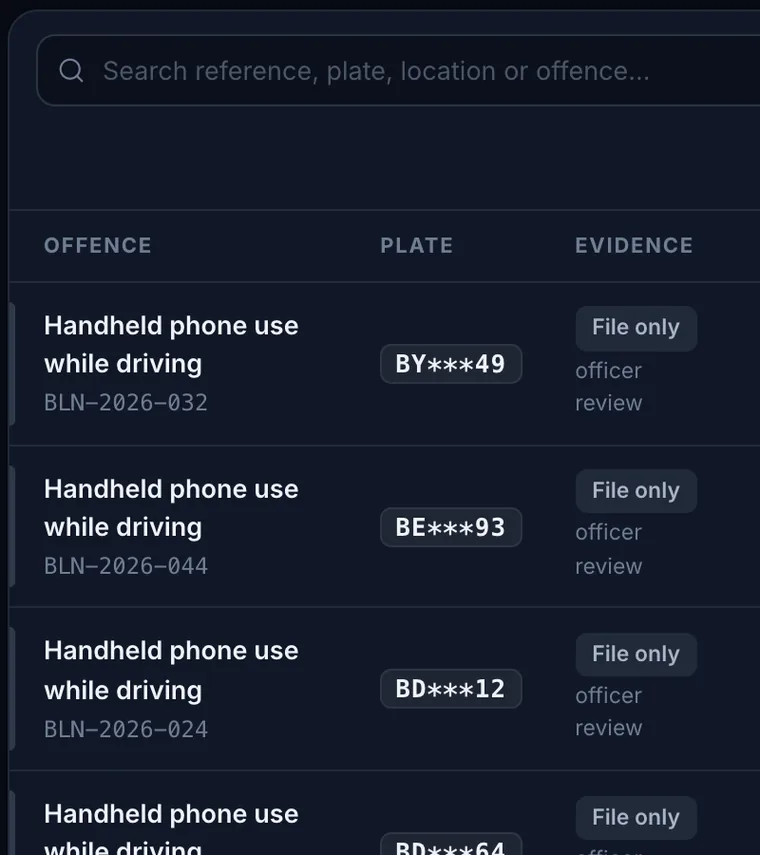
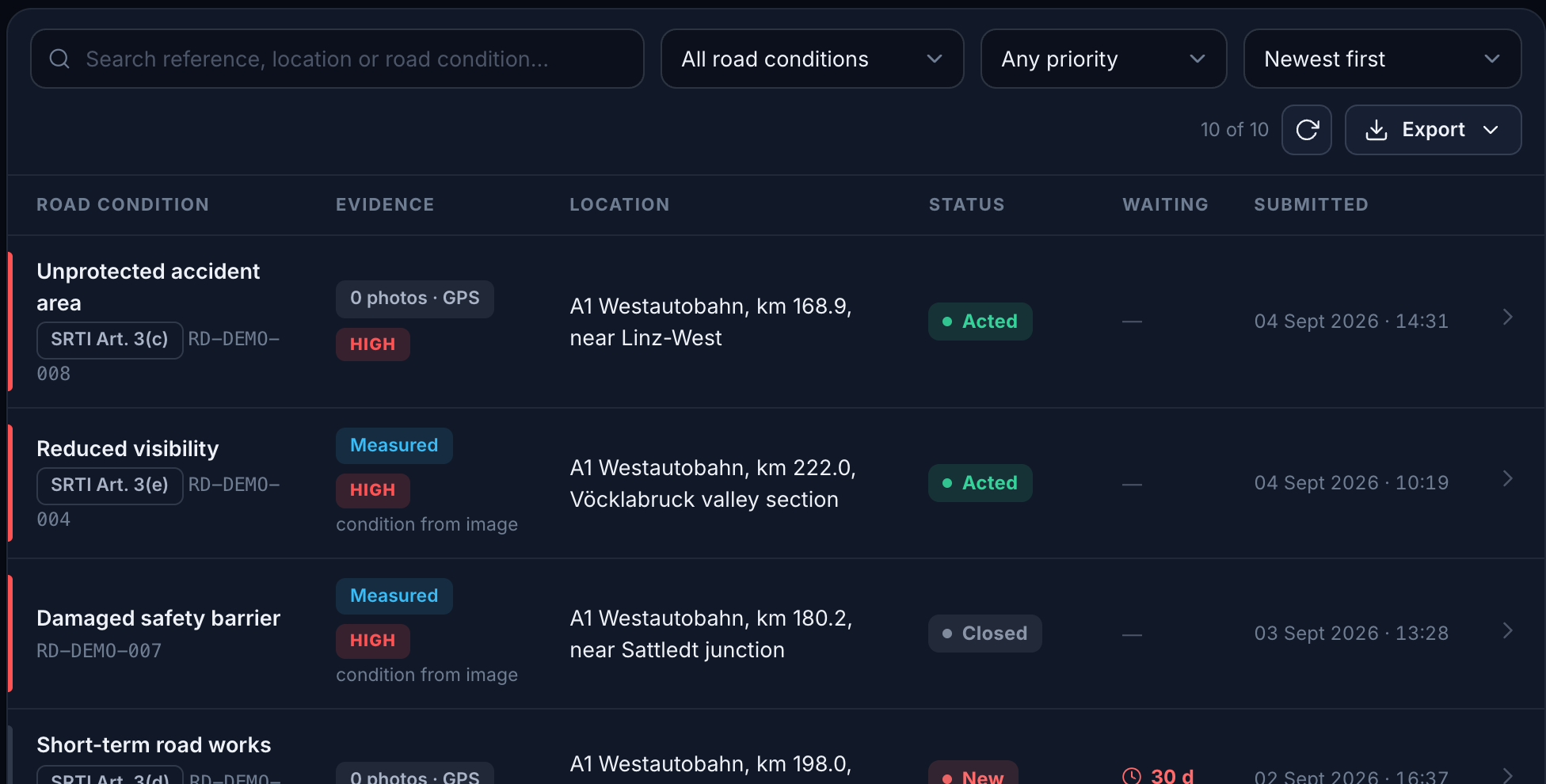
Civesto Authority — authority console
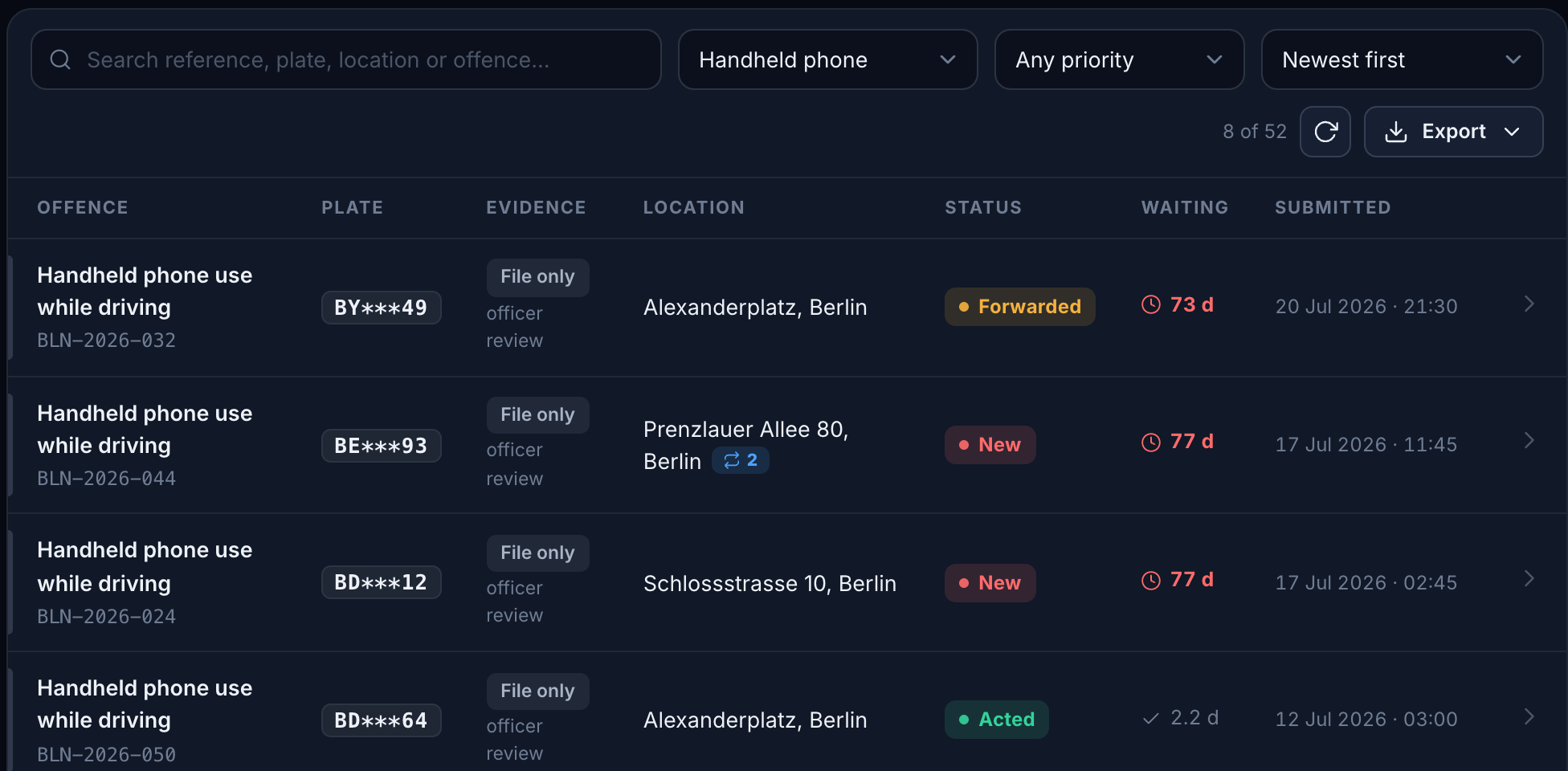
Civesto Authority console: case queue with waiting times, evidence integrity, location, status and export options

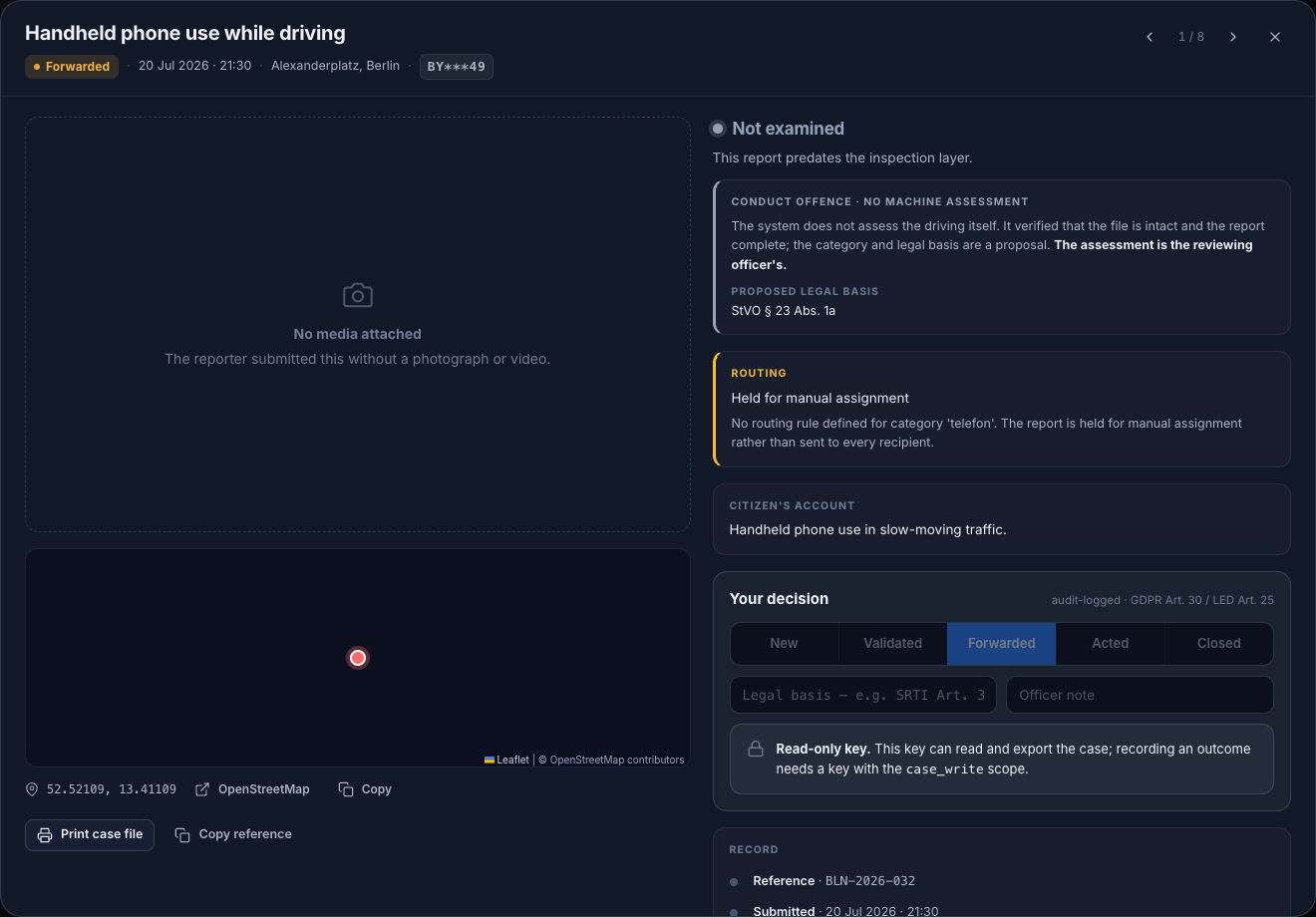
Actual interface. Plates are shown masked; violation titles are labelled with the relevant national legal provision.

THE PROBLEM

Citizens already report. The problem is that what they send cannot be processed.

Today a driver who sees a defect or a violation makes a phone call, sends an e-mail or posts on social media. What accumulates on the authority side is unstructured, without location, duplicated, and of uncertain evidential value.

01

Unstructured

Free text and arbitrary photos; which violation, where, when — no machine can read it.

02

Duplicated

Five people report the same event; the authority opens five separate files, none aware of the others.

03

Wrong door

Much of what reaches the road operator actually belongs to the police; nobody sorts it.

HOW IT WORKS

Three steps. None of them passes judgment.

STEP 01
Capture

The citizen reports from the app with image, location and timestamp. With no coverage the report waits on the device and sends itself once the network returns — the capture time is preserved.

STEP 02
Preparation

The system structures the report: location resolution, duplicate merging, image quality and matching to the relevant legal provision. It measures; it does not judge.

STEP 03
Delivery

Delivered to the responsible unit as a signed, machine-readable file. The authority opens it in its own system, assesses it and decides.

FOR AUTHORITIES

Exactly what the officer needs on screen.

The authority layer is multi-tenant and data isolation is architectural: each authority sees only files within its own jurisdiction. Authority data cannot be reached from the citizen side.

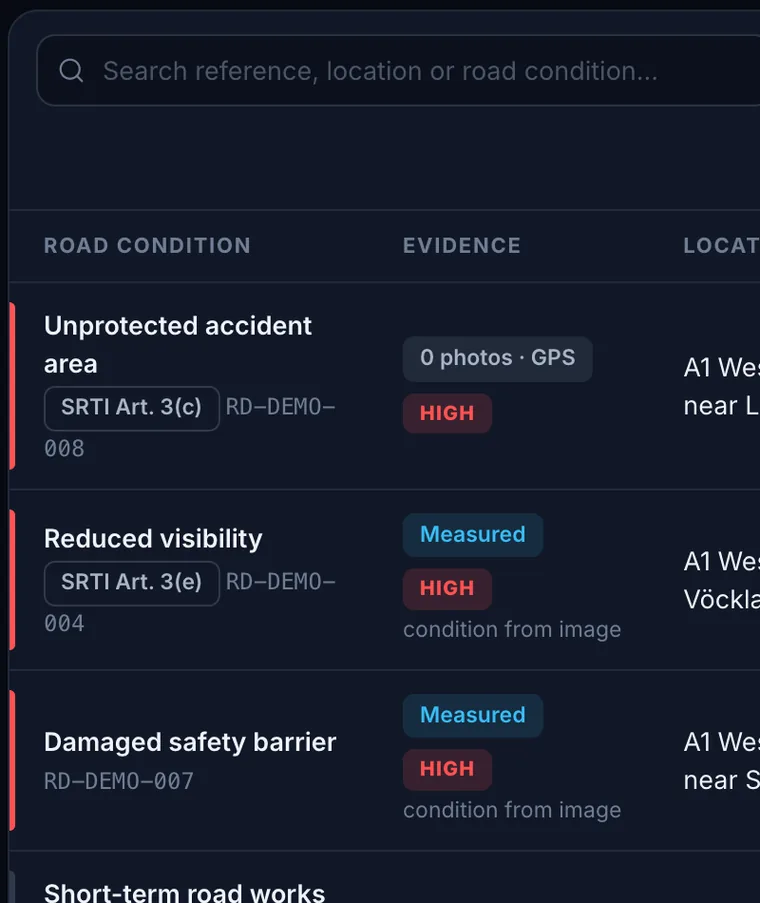
Inbox and workflow

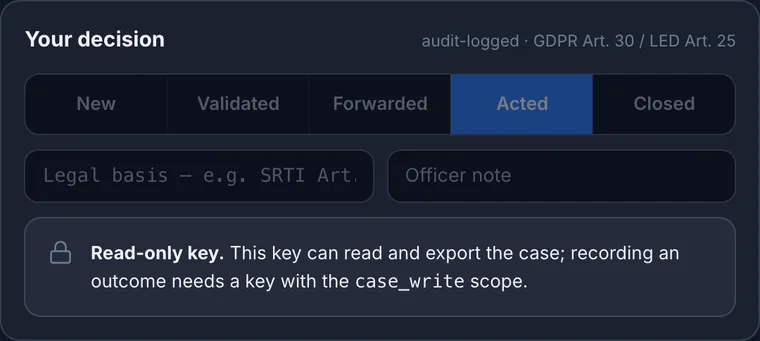
Pending, forwarded, acted and closed files in one list; average response time and weekly action count at the top.

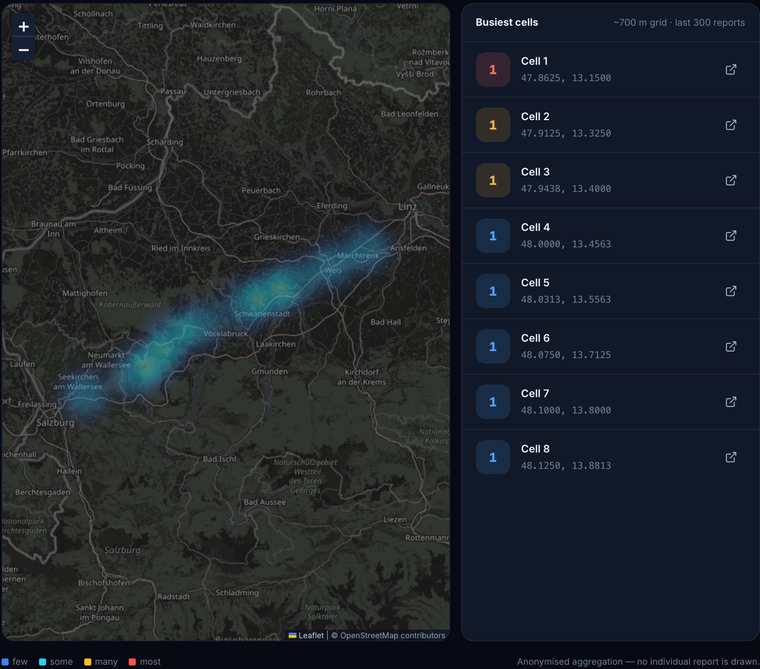
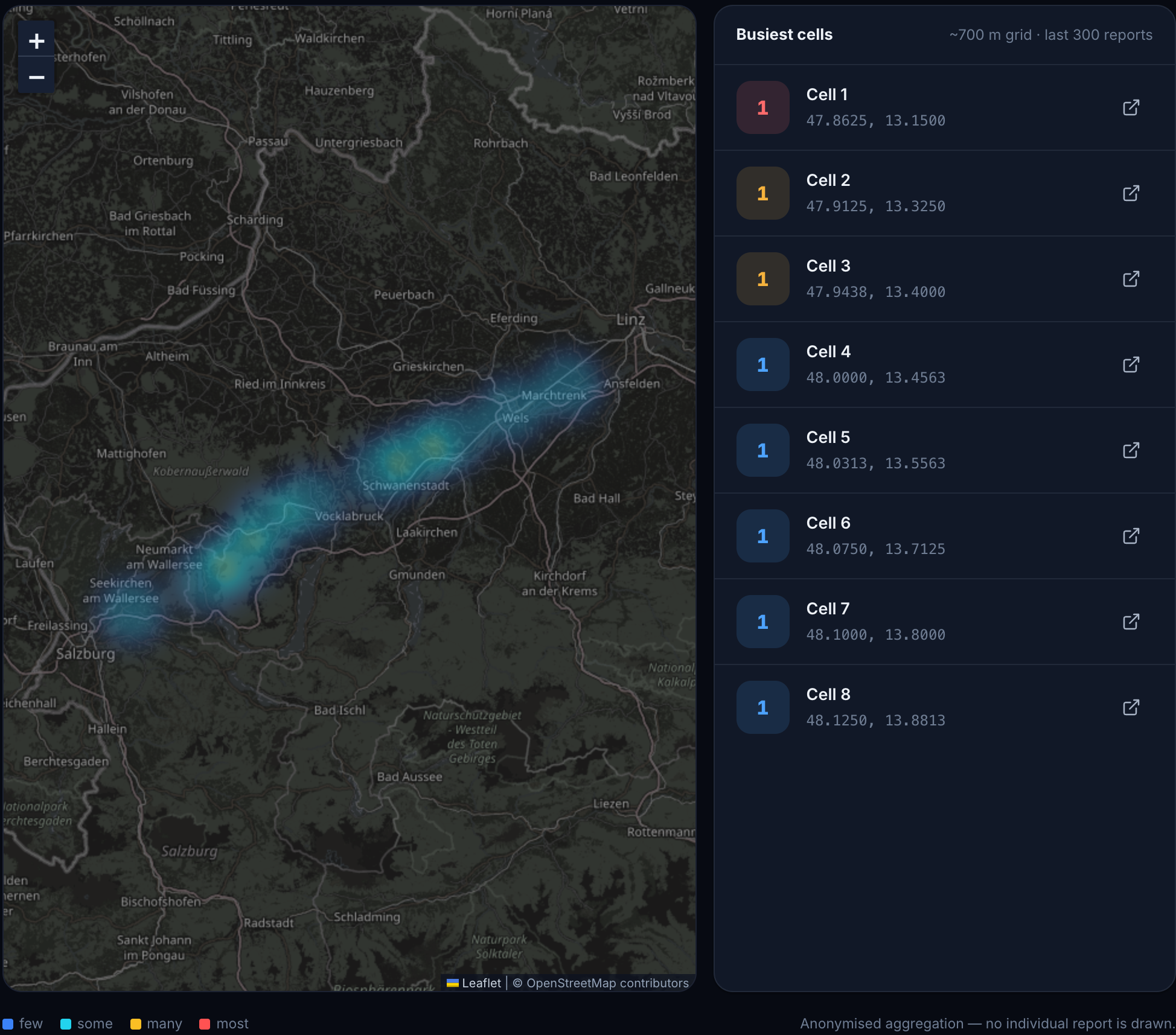
Heatmap and statistics

What piles up where — spatial and temporal distribution for resource planning.

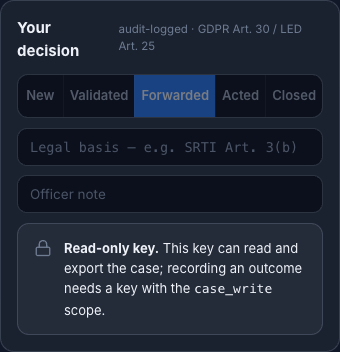
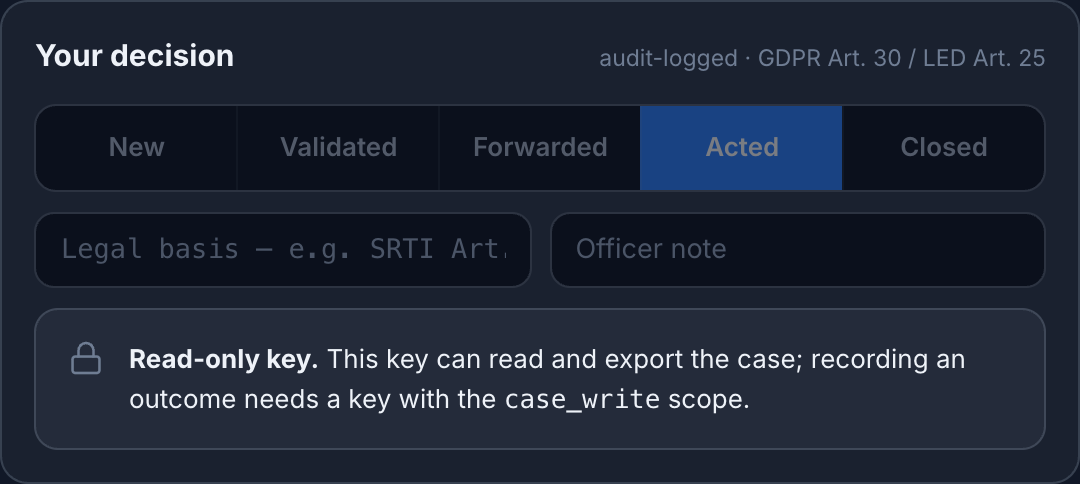
Full audit trail

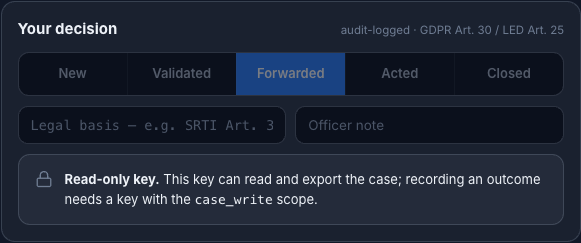
Who did what and when. An immutable record; accountable after the fact.

Export

CSV, XLSX, PDF, archival PDF/A-3, DATEX II and GeoJSON. Whichever your existing system reads.

DATA PROTECTION

Data stays where it is meant to stay.

Runs on the authority's own infrastructure The server can sit in the authority's data centre; hosting location is the authority's decision.
Reporter identity is separate from the file The authority layer sees no more than it needs to do its work.
Layers are architecturally separate The citizen service holds no authority data; separation is by design, not by configuration.
Retention is the authority's call How long data is kept and when it is deleted follows the authority's own policy.
INTEGRATION

We are not asking you to change your existing system.

Civesto is a supplier component, not an operator. It produces files in the format you expect, without touching your processing logic.

OpenAPI 3.1

An open interface definition your integration team can read from day one.

Signed delivery

HMAC-signed delivery — you can verify the file was not altered in transit.

Modular

Modules you do not need arrive switched off. The core is only the preparation of the report.

CANDOUR

The system is technically ready and not yet in live operation at any public authority. We have no completed pilot. We are telling you this plainly — rather than inventing a reference.

What we are looking for is a single pilot: narrow scope, clear outcome, measurable result. We say up front what we cannot do; going live is a beginning, not an end, and support continues.

Let us start with one pilot.

Let us narrow the scope together around your own workflow; we share the technical documentation and a demo environment before the meeting.